Public Comment or Written Submission: Choosing a Way to Respond
Public comment or written submission: compare how speaking and writing work so you can choose a clear, accessible way to place your view before local decision-makers.

Should you speak at a public meeting or send a written submission? Public comment or written submission can both bring your view to a local decision-maker, but they serve different communication needs. Choose based on whether your point depends on a live explanation, careful detail, or both.
Speaking and writing carry different kinds of information
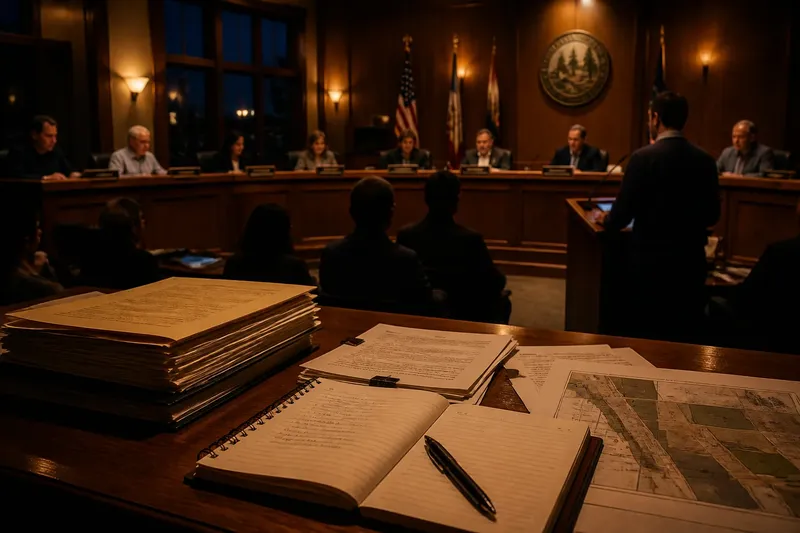
Public comment is a spoken contribution during a meeting or hearing. A written submission is sent to a public body, often through an online form, email, or paper correspondence. A particular process may accept one format or both, and it may set rules for how each is handled.
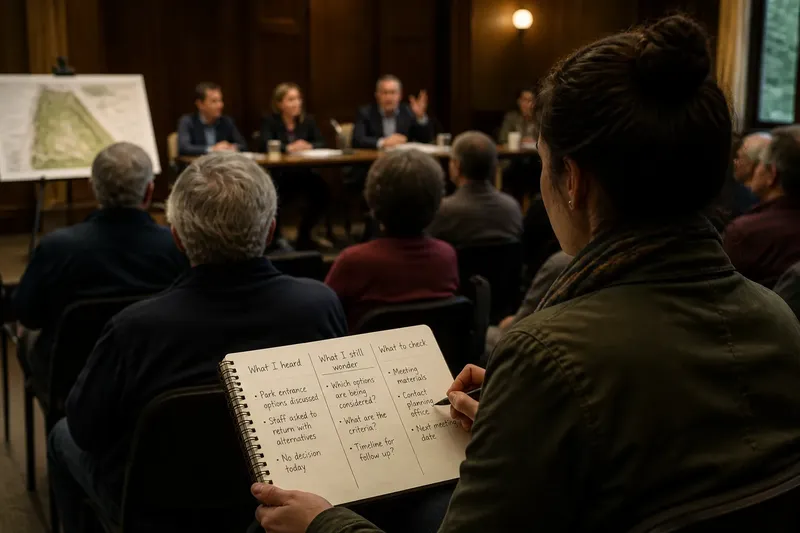
Speaking makes your point audible in the meeting room. Your emphasis and tone can help listeners understand what matters to you, and some formats allow officials to respond or ask questions. The tradeoff is that a short speaking slot may not leave room for every detail.
Writing lets you arrange an explanation, check names and references, and revise unclear sentences before sending. It can be easier for a reader to revisit a specific point, but it may not produce a direct exchange. A long submission can also bury the request beneath background detail.
Neither format automatically carries more weight. The public body’s process determines how contributions enter its consideration. Treat the format as a way to communicate clearly, not as a route to a particular outcome.
Speaking makes a focused point audible
A spoken contribution can work well when one central concern matters more than a long chain of supporting details. For example, you might explain how a proposed change could affect residents who use a nearby crossing, then ask officials to consider that effect.
Keep the spoken message easy to follow: state the issue, give the reason it matters, and make your request. If a process provides a time limit, prepare notes that fit the stated allowance. A few prompts can help you return to your central point without trying to memorize a full speech.
Speaking also depends on being able to join the meeting in an accepted way. Travel, work schedules, access needs, language, or anxiety may make attendance difficult. Those constraints do not make a resident’s perspective less relevant; they may make another communication channel more workable.
Writing gives complex points room to breathe
A written submission can suit an issue that depends on several connected facts, a sequence of events, or a particular document. Use a simple order: identify the issue, state your position, explain the reasons, and say what you want the public body to consider.
Separate what you directly observed from what you believe or recommend. If you refer to a map, proposal, or service notice, identify it so the reader can locate the same material. Keep separate topics in separate submissions when they belong to different decisions or offices.
Writing can also help when you need time to shape your words or cannot attend. Still, sending a message does not by itself establish that it has reached the relevant decision process. Use the official route specified for that matter.
Using both formats can divide the work
When a process accepts both channels, you can give each a distinct job. A short spoken contribution can identify the central concern, while a written submission can explain supporting details. Make the link between them clear, but do not assume that one will automatically be attached to or considered alongside the other.
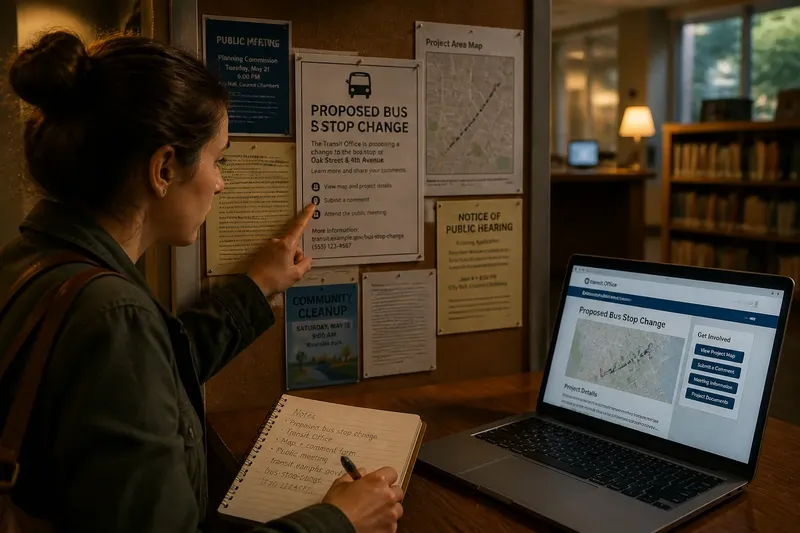
Say you want a town to reconsider the location of a proposed bus stop. You have the published map and a concern about how the location relates to a nearby crossing. You speak briefly to ask officials to examine that relationship, then send a written note identifying the map location and explaining the concern. The room hears the main point, while the note gives readers a reference they can check; whether both enter the same record depends on the process.
Duplicating a message is not worth the effort if only one channel is accepted or if the second version adds no context. Use the time instead to make the contribution clear and route it correctly.
Questions about public comment or written submission?
Can I speak without writing a full speech?
Brief notes can help you state the issue, reason, and request in your own words. Follow the meeting’s stated speaking arrangements, including any time or sign-up rules.
Will officials read my written submission aloud?
That depends on the process. A submission may be received without being read during the meeting, so check how written material is handled.
Should I use both formats?
Use both only when the process permits them and each adds something useful. Keep the spoken point concise and use writing for context or supporting detail.
What if neither format is accessible to me?
Ask the responsible public office whether it accepts another channel or can provide an accommodation, such as interpretation or an alternative way to participate. Available options vary by process.
Check how contributions enter the public record
Before deciding what to send, look at the official notice or meeting page for the accepted channels and how contributions are recorded or shared. A spoken statement may be reflected in meeting minutes or another record, while a written submission may be retained or circulated under local procedures. Do not assume the formats create identical records.
- If the notice names a written submission route, use that route; if it gives no route, ask the responsible office where to send the material.
- If the notice says speakers must sign up, follow that arrangement; if it does not explain how to join, contact the meeting organizer before relying on a speaking slot.
- If the instructions specify a length or subject limit, edit your contribution to fit it; if the limits are unclear, ask the office what applies.
- If the process explains how written material is recorded, follow those instructions; if it is silent, ask whether the submission will be retained or shared.
- If the process accepts both formats, give each a distinct purpose; if it accepts only one, concentrate your message in that channel.
- If an access, language, or scheduling barrier affects your choice, ask about an accommodation or alternative channel; if none is available, decide which accepted option you can realistically use.
The choice between public comment or written submission comes down to what your point needs and how the specific process receives it. A clear spoken request, a carefully organized written explanation, or a purposeful combination can make your view easier to understand without suggesting that any one contribution determines the decision.