How to Listen at Your First Community Meeting
A first community meeting is easier to follow when you plan what to listen for, take focused notes, and leave knowing which questions remain open.
Which parts of a community meeting should you pay attention to when you are new to the issue? At your first community meeting, a simple listening plan can help you follow one agenda item without trying to capture every comment.
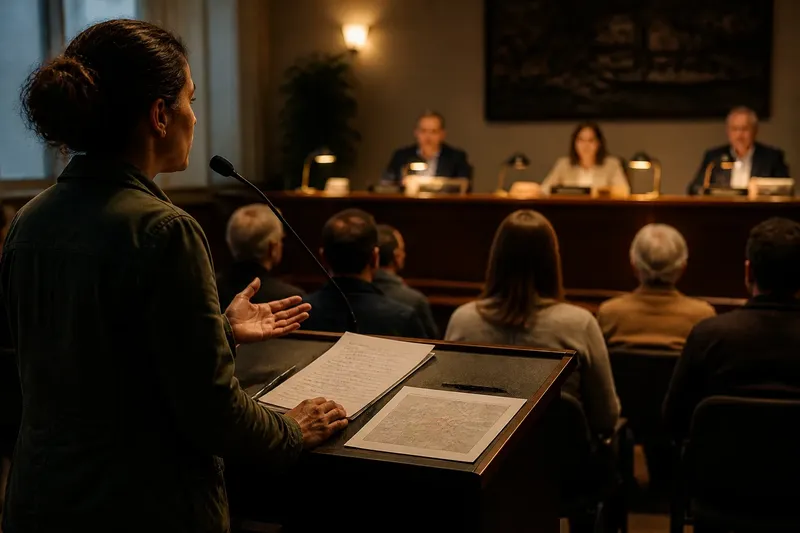
You do not need to speak to make the visit useful. Choose what you hope to learn, listen for the moments that answer it, and keep a clear record of what you still do not know.
Choose one purpose for your first community meeting
Before you go, write a plain sentence that describes why you are attending. It gives you an anchor when the discussion branches into details you have not encountered before.
- If you want basic context, listen for the issue’s background, the offices or groups involved, and what the meeting says will happen next. If those points are not clear, note the missing piece and check the meeting materials afterward.
- If you have a specific concern, prepare one focused question and one follow-up. If the answer addresses your situation, record it; if it is referred elsewhere or left open, note the office or question to follow up on.
- If you want to understand the discussion, listen for the reasons people give, the options they mention, and what information they say is missing. If the conversation becomes too detailed, return to the agenda item and your main question.
- If you are attending with someone, agree on whether one of you will take notes or whether you have different things to listen for. If your purposes overlap, divide them; if they do not, leave space to compare notes afterward.
Imagine you want to understand a neighborhood committee’s discussion of a park entrance. You write, “I want to learn what access options the committee is considering.” During the meeting, members ask staff to bring back alternatives, but no final choice is announced. Your note can then distinguish the options discussion from a decision and identify the promised follow-up.
Use the agenda to prepare a few listening questions
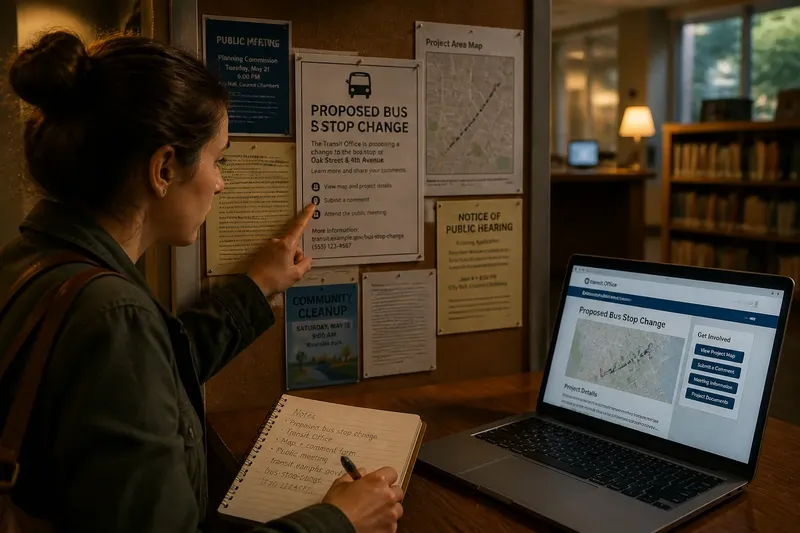
Read the meeting notice and agenda before leaving. An agenda is an outline of planned topics, not a full account of what each item means. Mark the item you care about and jot down unfamiliar terms to recognize if they come up.
Pick a few questions that serve your purpose:
- What issue or request is under discussion?
- What reasons or concerns are people raising?
- What information does the group say it still needs?
- What follow-up, if any, does someone agree to take on?
If the agenda already answers a question, cross it off. If a point remains unclear while people are speaking, write it beside the item instead of trying to resolve it in the moment.
For the park entrance discussion, you might listen for which access options are being considered and what staff are asked to bring back. If the meeting does not answer either question, mark both as open rather than filling the gaps from assumptions.
Check the location, room, start time, entry instructions, and any information about remote access or accommodations. If a detail is missing, contact the organizer listed on the notice rather than guessing.
Listen for how the conversation develops
Meetings may move from an introduction to a presentation, questions, discussion, and a request for further work. The order varies. Treat these as possible stages, not a script you can count on.
When an item begins, note its name and stated purpose. During a presentation, listen for the main points and the reasons offered. As people respond, notice whether they are adding information, raising concerns, or suggesting a different approach. If someone summarizes the discussion or assigns a follow-up, record that moment and who is responsible.
Some terms describe different kinds of activity. A motion is a formal proposal for a group to consider. A recommendation offers advice to another body. A referral sends an issue to an office or group for more work. If you hear an unfamiliar term, write it down with enough context to ask about it later.
Listen for whose view you are hearing. One speaker’s opinion is not necessarily a shared position, and a staff explanation is not the same as a group discussion. If you cannot tell who is expected to do the next task, mark that uncertainty and keep listening.
It is not worth trying to write down every remark or recreate the meeting word for word. That can distract you from changes in the conversation. Focus on the points that help you understand the issue, the reasons raised, and any follow-up mentioned.
Take notes that separate what you heard from what you infer
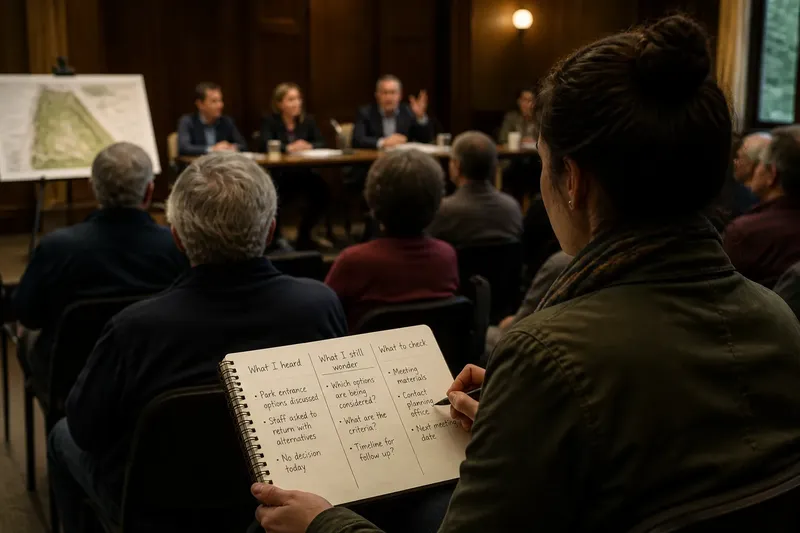
Use one page divided into three areas: “What I heard,” “What I still wonder,” and “What to check.” Write the agenda item at the top and use short phrases. This layout keeps observations, questions, and later tasks from blending together.
Record names only when they help you identify a role or a person assigned to follow up. Avoid collecting personal details unrelated to your purpose. If you use a phone, silence notifications and dim the screen so it does not distract you or nearby attendees.
Separate direct observations from interpretation. “The chair asked staff to return with other options” describes something you heard. “The group rejected the proposal” is an interpretation unless that outcome was clearly stated. If you are unsure, mark the note as uncertain rather than completing it from memory.
If a question matters to you and remains unanswered, ask the organizer or relevant office how to follow up. Tie your question to the agenda item so it is easier to route. For a matter governed by official instructions or local procedure, consult the applicable source instead of relying on a shorthand note.
What can you do when the meeting is hard to follow?
What should you do if you arrive late?
Ask meeting staff or an usher for the current agenda item rather than trying to reconstruct everything you missed. Then listen for the topic, the speaker’s role, and any follow-up mentioned.
What if people use unfamiliar terms?
Write down the term and the point around it, then continue listening. Ask for clarification during a pause or check the relevant meeting materials afterward.
Can you leave before the meeting ends?
If you need to leave, note which item is underway and what you heard about any follow-up. If you missed information you need, ask the organizer or responsible office where to find it.
What if you cannot tell what the discussion means for the issue?
Record the comments or next task you heard and mark the meaning as unclear. If the uncertainty matters to you, ask a focused follow-up question rather than treating tone or repeated comments as a settled answer.
Write a short record while the details are fresh
After the meeting, record its date and name, the agenda item you followed, the main points you heard, and any question still open. Include a follow-up task only if someone stated it, and note who was assigned to handle it when that was clear.
For the park entrance discussion, imagine your rough notes say that committee members compared access options and asked staff to bring back alternatives. You rewrite them as: “Committee discussed park entrance options; staff asked to return with alternatives; no final choice heard; unclear when the item returns.” That record preserves the discussion and its limits without presenting your notes as official minutes.
If the meeting did not resolve your question, contact the organizer or office named during discussion. Ask for the information you need and identify the agenda item. If you only wanted context, your notes may be enough to understand what to listen for next time.
A useful first community meeting does not have to end with a complete answer. The practical test is whether you can describe the discussion you followed, identify what remains uncertain, and know where to direct the next question.